Showing posts with label process analytics. Show all posts

Predictive Intelligence for Chemical Industry Process Safety: How ISM Technology Is Revolutionizing Sensor Management

Intelligent Sensor Management

In today’s chemical processing environment, where operational uptime, safety, and precision are non-negotiable, the technology behind process sensors has become mission-critical. One of the most transformative developments in this space is Intelligent Sensor Management (ISM™)  from METTLER TOLEDO. ISM merges digital intelligence with traditional process analytics, offering real-time predictive diagnostics that alert operators to precisely when calibration, cleaning, or replacement is needed. The result is a smarter, safer, and more efficient way to manage sensors—one that minimizes downtime, protects technicians, and ensures continuous, accurate measurement.


This article explores how ISM predictive diagnostics work, what makes them different from conventional maintenance methods, and why they represent a significant step forward in chemical process management.


The Challenge of Maintaining Process Integrity


Chemical production facilities rely on hundreds, sometimes thousands, of process sensors to monitor variables such as pH, conductivity, dissolved oxygen, and gas concentration. These sensors are the “eyes and ears” of a process—responsible for ensuring reactions occur within narrow safety and quality parameters.


However, traditional sensor management has long been a pain point for plant operators. Scheduled Maintenance or calibration is typically performed on a fixed timeline, regardless of the sensor’s actual condition. This often leads to two costly outcomes:


  1. Unnecessary Maintenance that wastes labor and exposes technicians to potentially hazardous environments, and
  2. Unexpected sensor failures between maintenance cycles can disrupt production or compromise safety.


Predictive diagnostics were developed to eliminate this guesswork. By embedding algorithms directly into the sensor’s microchip, ISM transforms the device from a passive instrument into an active analytical asset—capable of self-monitoring, self-reporting, and anticipating its own service needs.


What Is Intelligent Sensor Management (ISM)?


METTLER TOLEDO’s ISM technology is a digital platform for process analytics that combines high-precision measurement with embedded intelligence. At its core, ISM delivers three interlocking functions—measure, manage, and integrate—each designed to enhance performance, reliability, and control.

  • Measure – Accurate and Interference-Free Data
    • ISM sensors use digital signal transmission to deliver readings without analog noise or distortion. This eliminates familiar sources of measurement error, such as electromagnetic interference, and ensures consistent accuracy even in harsh process environments.
  • Manage – Predictive Maintenance Made Simple
    • The real innovation lies in ISM’s ability to predict maintenance needs. Using onboard analytics, each sensor continuously evaluates its own condition, estimates remaining useful life, and communicates these insights directly to operators or maintenance systems. This enables timely intervention—only when needed—avoiding unnecessary calibrations or replacements.
  • Integrate – Seamless Communication with Control Systems
    • ISM sensors are designed to integrate smoothly with existing process control and asset management systems. They deliver real-time diagnostics and measurement data directly into plant software, allowing for automation of maintenance schedules, work orders, and compliance tracking.

Together, these three pillars make ISM a fully self-aware sensor management ecosystem—one that delivers predictive intelligence without requiring complex data interpretation.


The Power of Predictive Diagnostics


ISM’s predictive capability is powered by a set of three core diagnostic indicators embedded in each sensor:


  • Dynamic Lifetime Indicator (DLI): Forecasts the number of days a sensor or a replaceable component will need to be exchanged.
  • Adaptive Calibration Timer (ACT): Calculates the optimal interval before the next calibration is due.
  • Time to Maintenance (TTM): Predicts when cleaning or other Maintenance will be required.


These diagnostics are continuously updated as the sensor operates, ensuring that maintenance decisions are data-driven rather than calendar-driven. When any indicator approaches zero days, the system can automatically trigger a work order—ensuring timely attention without the inefficiency of premature service.


Maximizing Uptime and Process Safety


For chemical plants, downtime is expensive—not just in terms of production loss, but also in the potential safety risks posed by faulty measurements. Inaccurate or unreliable sensor readings can lead to off-spec product batches, unstable reactions, or even unsafe conditions.


With ISM, these risks are dramatically reduced. Continuous sensor health monitoring ensures measurements remain within safe, reliable limits. The diagnostics provide a constant, transparent view of sensor condition, helping operators maintain complete confidence in their instrumentation.

By scheduling Maintenance precisely when required, ISM keeps sensors in optimal working order—maximizing uptime and ensuring that critical safety thresholds are never compromised.


Ensuring Measurement Accuracy and Reliability


The integrity of a chemical process depends heavily on data accuracy. Analog sensors are vulnerable to signal interference and drift, which can distort readings over time. ISM overcomes this limitation through fully digital communication between the sensor and the transmitter.


Because all measurement and diagnostic data are transmitted digitally, there is no risk of analog signal degradation. This ensures that every reading arriving at the control system is accurate and trustworthy. The result is improved process control, reduced product variability, and enhanced compliance with quality standards.


Calibration Efficiency and Technician Safety


In many chemical facilities, calibration points are located in confined spaces or hazardous zones. Traditional on-site calibration exposes technicians to unnecessary risk and disrupts production. ISM addresses this challenge by storing calibration data within the sensor itself.


This allows sensors to be calibrated safely in a maintenance shop—far from the process line—and then stored until needed. When a field sensor requires calibration or replacement, technicians can swap it for a pre-calibrated unit, minimizing exposure time in hazardous environments.


In addition to improving safety, this workflow also increases efficiency. Maintenance can be performed offline and in parallel with operations, keeping production continuous and downtime to a minimum.


Best Practices for Using ISM in Chemical Applications


Implementing ISM in a chemical facility involves a straightforward four-step approach:


  1. Deploy Factory-Calibrated Sensors – ISM sensors arrive pre-calibrated and ready for immediate use. Operators may perform an initial calibration if required for specific process conditions.
  2. Monitor Predictive Data in Real Time – ISM diagnostics can be displayed directly on the process control system. When an indicator reaches zero days, automated work orders can be generated.
  3. Swap Sensors Quickly When Needed – Replace sensors as soon as predictive diagnostics indicate Maintenance or calibration is due, using pre-calibrated spares.
  4. Perform Maintenance in the Shop – Using METTLER TOLEDO’s ISM Core™ software, technicians can follow guided calibration and maintenance procedures to ensure traceability and consistency.


These best practices combine to form a closed-loop maintenance ecosystem that supports proactive planning, documentation, and continuous improvement.


Strategic Benefits and Long-Term Value


The adoption of ISM predictive diagnostics goes beyond technical convenience—it has strategic implications for chemical manufacturers. By turning sensors into self-diagnosing assets, plants gain measurable benefits in four key areas:


  • Operational Efficiency: Reduced unplanned downtime and fewer maintenance interventions.
  • Worker Safety: Less time spent in hazardous zones.
  • Quality Assurance: Continuous monitoring ensures stable, accurate measurements.
  • Regulatory Compliance: Built-in digital records create transparent audit trails.


In essence, ISM moves chemical processing toward a predictive, autonomous Maintenance model, where decisions are guided by sensor intelligence rather than human estimation.


For facilities seeking to optimize productivity while maintaining uncompromising safety and quality standards, ISM predictive diagnostics represent a compelling advancement—a clear example of how digital transformation can yield tangible industrial results.

Optimizing Production Quality with Turbidity Meters

Optimizing Production Quality with Turbidity Meters

Turbidity meters play a crucial role in industrial manufacturing processes by providing real-time, in-line measurement of turbidity levels. Turbidity, the cloudiness or haziness of a fluid due to suspended particles, can significantly impact product quality and process efficiency. Industries rely on turbidity meters to monitor and control various stages of production, ensuring optimal outcomes and compliance with regulatory standards.

Turbidity meters are analytical instruments that measure the concentration of suspended particles in a fluid by assessing the scattering of light. They provide continuous, accurate readings that help operators make informed decisions about process adjustments. Unlike laboratory measurements, in-line turbidity meters offer immediate feedback without interrupting the production flow, enhancing responsiveness and productivity.

Several industries utilize turbidity meters extensively. The pharmaceutical sector monitors crystallization processes, ensuring active ingredients form correctly and impurities remain acceptable. The biotechnology sector uses turbidity meters to track biomass growth, measuring cell density in fermentation processes to optimize yields of biological products such as enzymes or antibodies.

The food and beverage industry, particularly breweries, depends on turbidity meters during beer filtration to maintain clarity and taste consistency. In chemical manufacturing, turbidity meters assist in phase separation processes, helping to distinguish between different chemical layers and ensuring purity. Water treatment facilities also employ turbidity meters to assess water quality, remove contaminants, and safeguard public health.

Turbidity meters are essential because they can enhance process control and product quality. Providing continuous data enables operators to detect deviations promptly and make necessary adjustments before issues escalate. This real-time monitoring reduces waste, lowers operational costs, and improves efficiency.

Moreover, turbidity meters contribute to compliance with regulatory standards. Many industries must adhere to strict guidelines regarding product purity and environmental impact. Turbidity measurements help verify that processes meet these requirements, avoiding costly penalties and reputational damage.

In addition, turbidity meters support innovation and development within industries. Accurate turbidity data allows for better understanding and optimization of complex processes like crystallization and fermentation. This insight leads to improved products, more efficient production methods, and competitive advantages in the marketplace.

In summary, turbidity meters are essential tools in various industrial sectors. They provide invaluable real-time data that enhances process control, ensures product quality, and facilitates compliance with regulations. By integrating turbidity meters into manufacturing processes, industries can achieve greater efficiency, reduce costs, and maintain high standards, ultimately contributing to their success and growth.

Alliance Technical Sales, Inc.
312 Park Avenue Unit 145
Clarendon Hills, IL 60514-0145
Phone: 630-321-9646
https://alliancets.com

The Expertise Advantage: Why Knowledgeable Sales Engineering Matters

The Expertise Advantage: Why Knowledgeable Sales Engineering Matters

In today's fast-paced, technology-driven industrial landscape, businesses are not just seeking, but actively pursuing ways to optimize their processes, improve efficiency, and maintain a competitive edge. Access to the proper process analytics and equipment applications is not just critical, but a game-changer in achieving these goals. However, navigating the complex world of industrial technology can be a challenge, but not an insurmountable one with the guidance of experienced professionals. This is where a skilled and knowledgeable sales engineering company, such as Alliance Technical Sales, Inc., doesn't just come into play, but takes the lead.

Sales engineering firms bridge the gap between the technical intricacies of process analytics and process equipment applications and businesses' specific needs. They provide invaluable assistance and product support, ensuring companies make informed decisions when selecting and implementing new technologies. By partnering with a reputable sales engineering company, businesses can tap into a wealth of expertise and resources to help them streamline their operations and achieve their goals.
One of the key benefits of working with Alliance Technical Sales, Inc. is our deep understanding of the latest process analytics and equipment applications. We stay at the forefront of technological advancements, continuously updating our knowledge base to offer the most relevant and effective solutions to our clients. This expertise allows us to provide tailored recommendations based on each business's unique requirements, taking into account factors such as industry standards, regulatory compliance, and scalability.

Moreover, sales engineering firms offer comprehensive product support, from initial consultation and system design to installation, training, and ongoing maintenance. This end-to-end approach ensures a smooth transition when implementing new technologies, minimizing downtime and maximizing the return on investment. By having a dedicated team of experts to rely on, businesses can focus on their core operations while leaving the technical details to the professionals.

Another crucial aspect of sales engineering is their ability to provide objective advice and guidance. With a vast network of industry contacts and a deep understanding of various vendors and products, companies like Alliance Technical Sales, Inc. can help businesses navigate the often overwhelming array of options available. They can provide unbiased recommendations based on a company's specific needs and budget, ensuring that the solutions are practical and cost-efficient.

In addition to their technical expertise, skilled sales engineering firms also excel in communication and customer service. They act as a liaison between the client and the technology vendors, translating complex technical jargon into easily understandable terms. This clear communication helps businesses make informed decisions and ensures that all stakeholders are aligned throughout the implementation process. Furthermore, the best sales engineering companies, like Alliance Technical Sales, Inc., prioritize long-term relationships with their clients, offering ongoing support and guidance as the business grows and evolves, thereby ensuring the continued success of the partnership.

In conclusion, a skilled and knowledgeable sales engineering company is vital in assisting with process analytics equipment applications and product support. By partnering with a firm like Alliance Technical Sales, Inc., businesses can access expertise, receive tailored solutions, and benefit from comprehensive product support. This collaboration enables companies to optimize their processes, improve efficiency, and stay ahead of the competition in an increasingly complex and technology-driven business environment.

Alliance Technical Sales, Inc.
312 Park Avenue Unit 145
Clarendon Hills, IL 60514-0145
Phone: 630-321-9646
https://alliancets.com

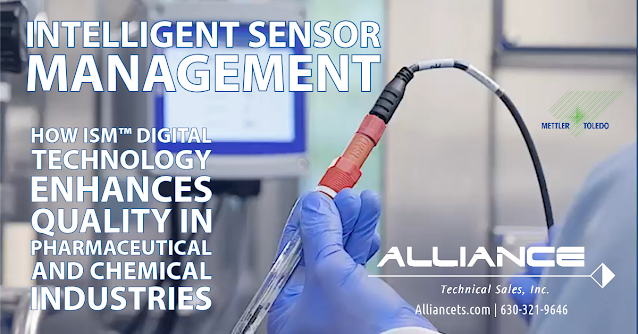
How ISM™ Digital Technology Enhances Quality in Pharmaceutical and Chemical Industries

ISM™ Digital Technology Enhances Quality in Pharmaceutical and Chemical Industries

Intelligent Sensor Management (ISM™) is a digital technology enhancing process analytical measurements. ISM systems, applied in monitoring pH, dissolved oxygen, and other critical parameters, assist pharmaceutical and chemical companies globally in ensuring process consistency and product quality. This video underlines the primary advantages of ISM digital sensors and ISM Core™ software.

Learn More About ISM from This Mettler Toledo Video


Alliance Technical Sales
https://alliancets.com
630-321-9646

Process Analytics: Measuring and Controlling Vital Parameters in Industrial Applications

Process Analytics

Process analytics is fundamental to many industrial applications, particularly in water treatment, chemical processing, food and beverage production, and pharmaceutical manufacturing. These operations often depend heavily on precisely monitoring and controlling specific process parameters, such as pH, oxidation-reduction potential (ORP), dissolved and gaseous oxygen, dissolved CO2, ozone, conductivity, and turbidity. Understanding these parameters and how they can be effectively measured and regulated is critical to maintaining optimal process conditions, ensuring product quality, and complying with environmental and safety regulations.

What is Process Analytics?


Process analytics is the systematic analysis of various industrial processes to optimize performance and efficiency. It involves collecting, processing, and interpreting data to monitor process performance, pinpoint issues, make informed decisions, and implement operational improvements. The specific parameters monitored will vary depending on the industry and process in question, but they typically relate to the process medium's chemical, physical, and biological characteristics.

Understanding Key Parameters

pH

pH is a critical parameter in many industrial processes as it measures the acidity or alkalinity of a solution. It is essential in chemical reactions, biological processes, and corrosion control. Process analytics involves continuously monitoring pH to ensure it stays within specified limits. pH sensors, typically comprising a reference electrode and a pH-sensitive glass electrode, are used to measure this parameter.

Oxidation-Reduction Potential (ORP)

ORP measures the tendency of a solution to either gain or lose electrons, essentially quantifying its oxidizing or reducing potential. This parameter is critical in chemical reaction processes like wastewater treatment and disinfection. ORP sensors, similar to pH sensors, utilize a reference electrode and a sensing electrode to provide a voltage output proportional to the solution's ORP.

Dissolved and Gaseous Oxygen

A process's dissolved and gaseous oxygen concentration can significantly impact chemical reactions, microbial activity, and oxidation processes. Oxygen sensors, which can be optical or electrochemical, measure the oxygen present. The sensors apply in various applications, including fermentation, water treatment, and combustion control.

Dissolved CO2

In processes like fermentation, brewing, and carbonation, the concentration of dissolved CO2 is a critical process parameter. Too much or too little can dramatically affect product quality and process efficiency. Infrared absorption or chemical sensing methods are often used to measure dissolved CO2 levels.

Ozone

Ozone is a powerful oxidizing agent used in water treatment and bleaching processes. Concentration needs close control to ensure effective treatment while minimizing the risk of harmful byproducts. Ozone sensors usually work by measuring the absorption of UV light, a characteristic property of ozone.

Conductivity

Conductivity measures a solution's ability to conduct electricity related to the concentration of ions in the solution. It's a crucial parameter in processes involving aqueous solutions, such as water treatment and chemical production. Conductivity sensors typically operate based on the principle of Ohm's law.

Turbidity

Turbidity measures the cloudiness or haziness of a fluid caused by suspended solids. It is a crucial parameter in water and wastewater treatment, as it can indicate the effectiveness of filtration processes and the presence of pathogens. Turbidity sensors usually work by measuring the scattering and absorption of light.

The Role of Process Analytics


Process analytics plays a critical role in modern industrial operations. By continuously monitoring these parameters and controlling them within defined limits, operators can maintain optimal process conditions, maximize efficiency, and ensure the quality and consistency of their products. Furthermore, data from process analytics can be used for predictive maintenance, helping to prevent equipment failure and reduce downtime.

In summary, process analytics provides invaluable insights into industrial operations, offering real-time visibility and control over critical process parameters. As technology advances, process analytics capabilities will expand further, bringing even more significant benefits to a wide range of industries.

Alliance Technical Sales, headquartered in Clarendon Hills, Illinois, are experts in evaluating, specifying, and applying process analytics instrumentation across many industries. Contact them at 630-321-9646 or visit their website at https://alliancets.com.

Dissolved Oxygen Measurement for Craft Breweries

Oxygen is both friend and enemy to the brewer!

It gives yeast what it wants to breathe and survive during the fermentation process and then becomes your main antagonist after the yeast has done its job.

Any process or transfer where beer becomes exposed to oxygen post-fermentation is an opportunity for oxygen to cause staling, muting, and shelf-life reduction. One example is the packaging process. The added oxygen resulting from placing the beer in cans, kegs, or bottles can affect the final product's consistency and taste.

As a brewer, you want to concentrate on producing the best-tasting beer. Therefore, it is critical to know how oxygen affects the brewing process and how packaging can eventually impact your beer's taste. It will give you the trust you need to create award-winning flavors that customers will enjoy, no matter how long the beer sits on the shelf.

METTLER TOLEDO Process Analytics offers the most accurate and cost-effective solutions for measuring dissolved oxygen in brewing applications. These robust optical dissolved oxygen sensors are durable and require minimal maintenance.

For more information about METTLER TOLEDO Process Analytics products in Illinois, Indiana, Iowa, and Wisconsin call Alliance Technical Sales at 630-321-9646 or visit their website at https://alliancets.com.

5 Ways to Improve Bioprocessing Measurements

How to Optimize Bioprocessing with Digital Sensors

There are continuous requirements for improve pH, DO and CO2 bioprocessing measurements. Meeting quality objectives while enhancing bioprocessing is a tremendous challenge.

Intelligent Sensor Management (ISM®) is a digital technology for in-line process analytics that incorporates intelligent algorithms into sensors. ISM/digital sensors provide real-time sensor diagnostics information, improves pharmaceutical measurements, provides greater process control and maximizes process equipment reliability/revenue.

For an onsite or on-line demonstration, contact Alliance Technical Sales. Call them at 630-321-9646 or visit their website at https://alliancets.com.

Eliminate Delayed Oxygen Measurement Safety Risk in Your Process Gas Analyzer


Having a car alarm that goes off 15 seconds after a break-in puts you at risk of property damage and significant loss. If you wouldn't take this risk with your car, why take it in your process plant?

If you're using an extractive oxygen analyzer that requires sampling and conditioning to prevent explosive conditions, that's exactly what you're getting - an alert up to 60 seconds after an oxygen build up is started. Using an extractive analyzer that requires sampling and conditioning means it's impossible to get real-time information. Measurements are delayed by up to a minute as the sample travels through pipes to the analyzer. In addition oxygen in the sample can be diluted by the gas ahead of and behind it, resulting in a falsely flat excursion curve. An alarm threshold may not be met when it should, so you get one, perhaps inaccurate, result in one minute.

Eliminate the risk. Get continuous real-time measurement. The GPro 500 tunable diode laser gas analyzer from Mettler-Toledo measures in-situ, without the need for sampling and conditioning. It provides continuous measurement and safety-critical applications, so you'll know about oxygen excursions immediately. Don't leave your plant safety up to delayed measurement. Rethink safety. Rethink gas analytics.

For more information, contact Alliance Technical Sales. Call them at 630-321-9646 or visit their web site at https://alliancets.com.

Alliance Technical Sales Products


By combining world-class products, application expertise, and unsurpassed customer service, Alliance Technical Sales enables its clients to increase manufacturing efficiency, reduce production costs, and improve product quality and value. Each of the manufacturers we represent has extensive experience solving critical service applications with the products they manufacture.

Alliance Technical Sales, Inc.
https://alliancets.com
630-321-9646

Analytical Measurement Solutions for Optimization of Your Brewing Process

Brewing Stage Diagram
Stages of brewing and areas for process measurement.
The beer market is currently experiencing an intense globalization process, reflected in escalating competitive and cost pressures. In addition to this, there is growing diversification into new, innovative beverages that demand maximum production flexibility. The time to market is becoming ever shorter, and product quality has to be guaranteed at a consistently high level, accompanied by an increase in productivity.

In-line Measurements in the Brew House

Proper process control plays a vital role in determining the flavor, foam stability, and color of the finished beer. The relative measurement sensors are exposed to high temperatures, and solid particles and turbidity constituents, and must be capable of surviving multiple CIP cycles.
InPro 8600 Turbidity Sensor
Turbidity Sensor

Measurements in the Fermentation and Storage Cellars

At standard fermentation temperatures, propagation of microorganisms is detrimental to the beer. In order to prevent this from occurring, hygienic plant design and use of materials resistant to CIP solutions are important criteria, as they are for in-line sensors.

DO and CO2 Sensors
DO and CO2 Sensors

Measurements in CIP Systems

The economic use of fresh water, as well as the multiple use of cleaning solutions, present a further basis for achieving overall cost reduction in line with the strive for greater efficiency of the brewing process. Here also, in-line systems are of help in monitoring and optimizing the relative sub-processes.

Measurements in Wastewater Treatment Facilities

Fouling of sensors in wastewater leads to uncertainty about the measurement results and can even result in measurement system failure. METTLER TOLEDO provides efficient and practical solutions in the wastewater treatment areas as well.

You can download the full "Analytical Measurement Solutions for Optimization of Your Brewing Process" brochure here, or view it in the embedded document below.

Industrial Corrosion Protection Through Chemical Treatment

"An ounce of prevention is worth a pound of cure", particularly when dealing with corrosion and it's effects on process equipment. Production downtime, safety concerns, environmental damage and personnel health all outweigh the obvious repair and replacement cost of the damaged equipment. All taken, the annual costs due to corrosion are estimated in the process and power industries are estimated to be around $750 billion globally.

Exterior treatments, such as painting and specialized coatings provide satisfactory results to maintain structural integrity. However, internal protection of process equipment requires a different approach. Building equipment from exotic materials which are immune from corrosion exceed any practical concept of reasonable cost. Another, much more reasonable approach is corrosion protection based on chemical treatment.

This guide, courtesy of Mettler-Toledo Process Analytics shows you the role in-line analytics play in keeping corrosion under control and avoiding unnecessary chemicals consumption in chemical plants, refineries, power and Cogen facilities.

Your local Process Analytics specialist can help you select the best equipment and strategy. Their experience and knowledge will save you time, money, and ensure quality. 

Learn How a pH Sensor Works

pH Sensor
pH Sensor (Mettler)
The video below will provide you with a basic visual understanding of the design of pH sensors and the principles behind pH probe operation. Before viewing the video, here are some pH basics:

What is pH measurement?

pH (potential of hydrogen) is a figure used to express the acidity or alkalinity of a solution on a logarithmic scale. On this scale 7 is neutral; lower values are more acidic and higher values are more alkaline, with a maximum measurement of 14. In process applications, pH is generally measured with an inline pH probe, the most common being the glass combination electrode. Additionally, an inline pH probe generally requires a process adaption, cable and transmitter.

How does a pH probe work?

A typical combination pH probe is made up of two separate electrodes built into one, a pH sensing electrode, and a reference electrode. In the simplest terms, a pH sensing electrode uses a special pH sensing glass membrane. H+ ions permeate the membrane creating a charge. The potential between the two electrodes is the measurement of hydrogen ions in the solution, giving the measure of pH. For more details, download the free pH Theory Guide.

What is the difference between a pH probe, a pH sensor and a pH electrode?

Absolutely nothing! The three terms are used interchangeably in the industry. They can be used for probes that are used in-process or in laboratory measurement. You may also hear the term "pH meter". This can be used for a piece of laboratory equipment, or the term pH meter can also be used to mean the combination of an inline pH probe, cable and transmitter.

https://alliancets.com
630-321-9646

Total Organic Carbon Analyzer

total organic carbon TOC analyzer for water and purified water
Mettler Toledo Thornton Model 500TOCi
Total Organic Carbon Analyzer
Image courtesy Mettler Toledo Thornton
Total Organic Carbon, or TOC, is one of several common water purity measurements. Purified water use in power generation, semiconductor manufacturing, and pharmaceutical production all depend upon minimum standards of quality to avoid adverse impact on process output or operation. Elevated levels of carbon compounds in purified process water indicates that water treatment equipment is not performing properly and needs attention.

TOC measurement involves oxidation of carbon compounds in the presence of UV light and a measurement of sample conductivity. Processing of the raw measurement yields a value for total organic carbon. Analytical instruments  that lessen the need for human involvement and deliver rapid and accurate results are preferred. Mettler Toledo provides an advanced solution for TOC measurement with it 5000TOCi analyzer.

  • Fast continuous measurement
  • Reagent and chemical free
  • Reliable operation
  • ISM Intelligent Sensor Management

More detail is provided in the document below. Share your process analytic challenges with fluid process specialists. Leverage your own knowledge and experience with their product application expertise to develop effective solutions.